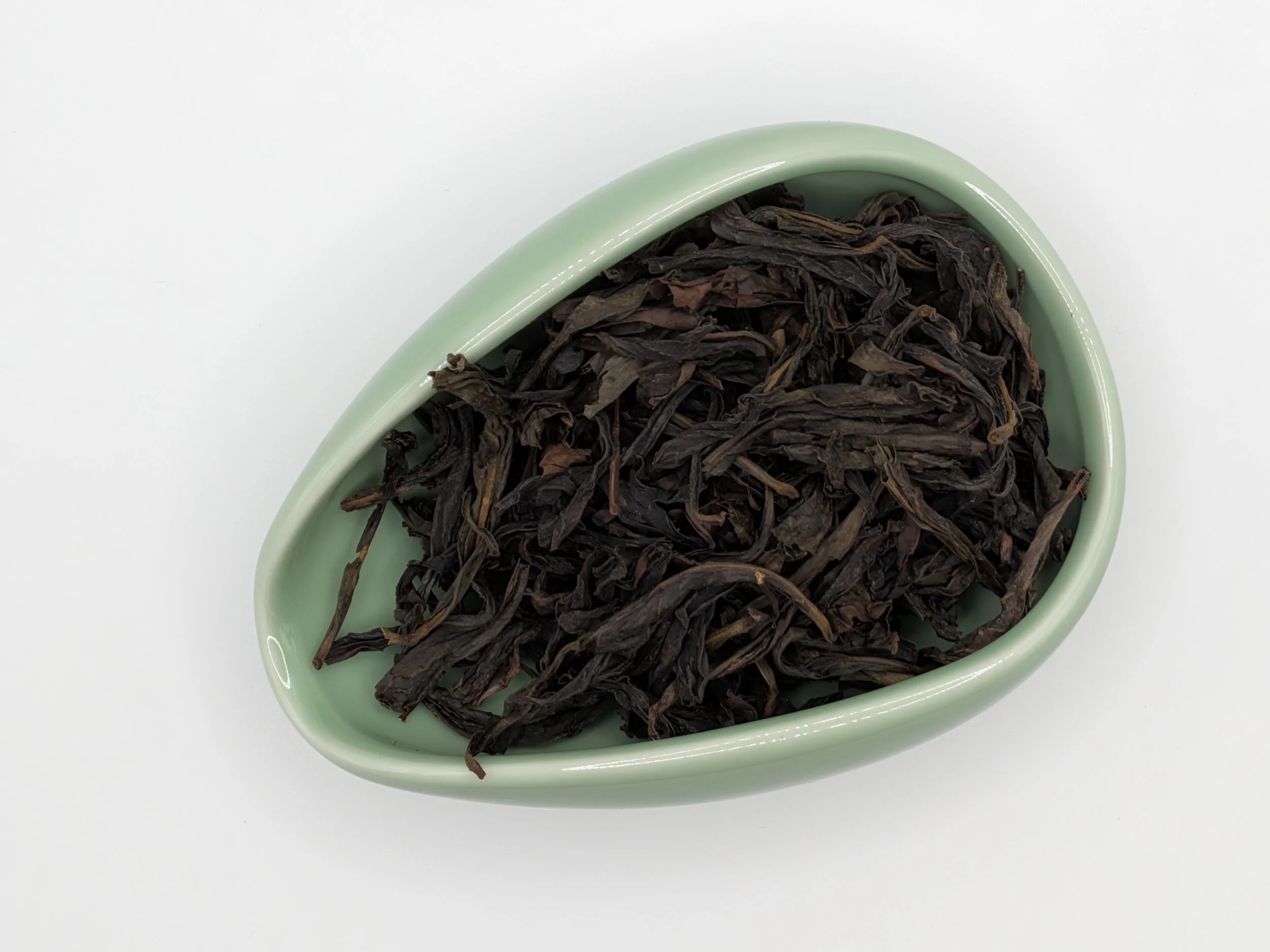
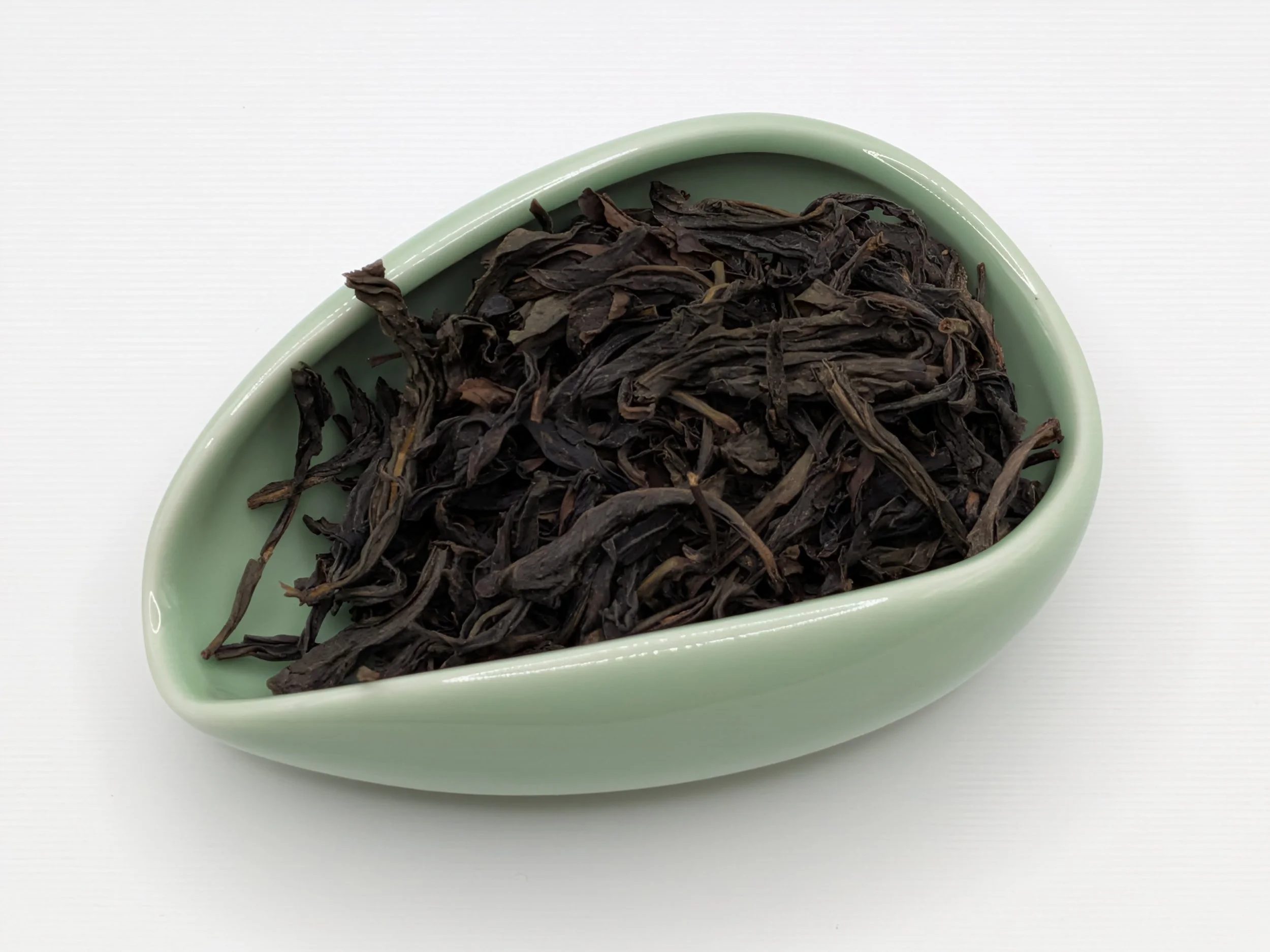
Aroma
Da Hong Pao has an aroma that unfurls in layers. First, there’s a deep, toasty warmth—notes of roasted nuts, charcoal, and caramelized sugar from the traditional Wuyi rock roasting. Beneath that, you’ll often find a sweet, almost orchid-like floral quality, blended with hints of dried fruit (think longan, red dates, or fig). A mineral scent rises as well, reminiscent of hot stone after rain.
Flavor
The taste is bold but refined, with the classic yan yun (岩韵)—the “rock charm” or mineral resonance that Wuyi teas are famous for.
You might notice:
Roasted cacao and dark caramel
Mineral brightness, like spring water over stone
Subtle fruitiness—plum, dried apricot, even a whisper of berry
Warming spice notes—cinnamon, nutmeg, or sandalwood depending on the roast
Floral undertones, usually orchid or magnolia
The mouthfeel is rounded, silky, and slightly thick, leaving a lingering sweetness that settles in the back of the throat.
Body & Texture
A well-made Da Hong Pao feels steady and composed—structured like a red wine yet effortlessly smooth. There’s a clarity in the liquor despite its depth, and the roast provides warmth without overshadowing the natural character of the leaf.
Aftertaste
One of its defining features is the long, echoing finish. You get waves of sweetness, mineral coolness, and a faint roasted glow that persists long after the last sip. The hui gan (回甘)—that returning sweetness—is persistent and elegant.
Character & Story
Da Hong Pao embodies the “rock essence” of the Wuyi cliffs. It’s a tea that feels ancient, shaped by stone, mist, and time. Traditional lore says the name comes from red robes hung around the original mother bushes to honor them after they healed an emperor’s mother—layers of mythology that add a ceremonial, almost reverent energy to the tea.
Even modern versions (which are blends, as the original bushes no longer produce commercially) aim to capture that same spirit: deep, mineral, roasted, and quietly powerful.