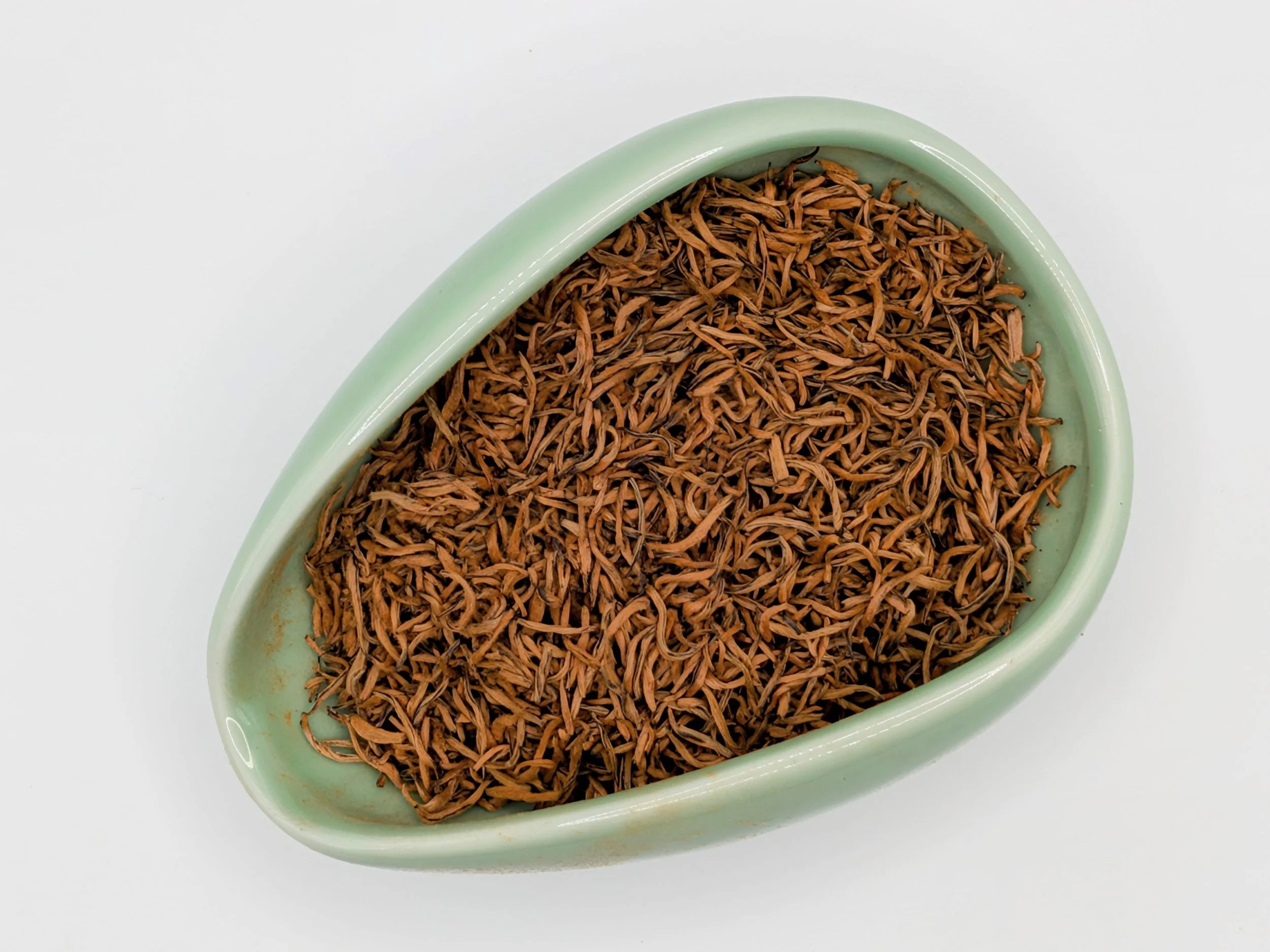
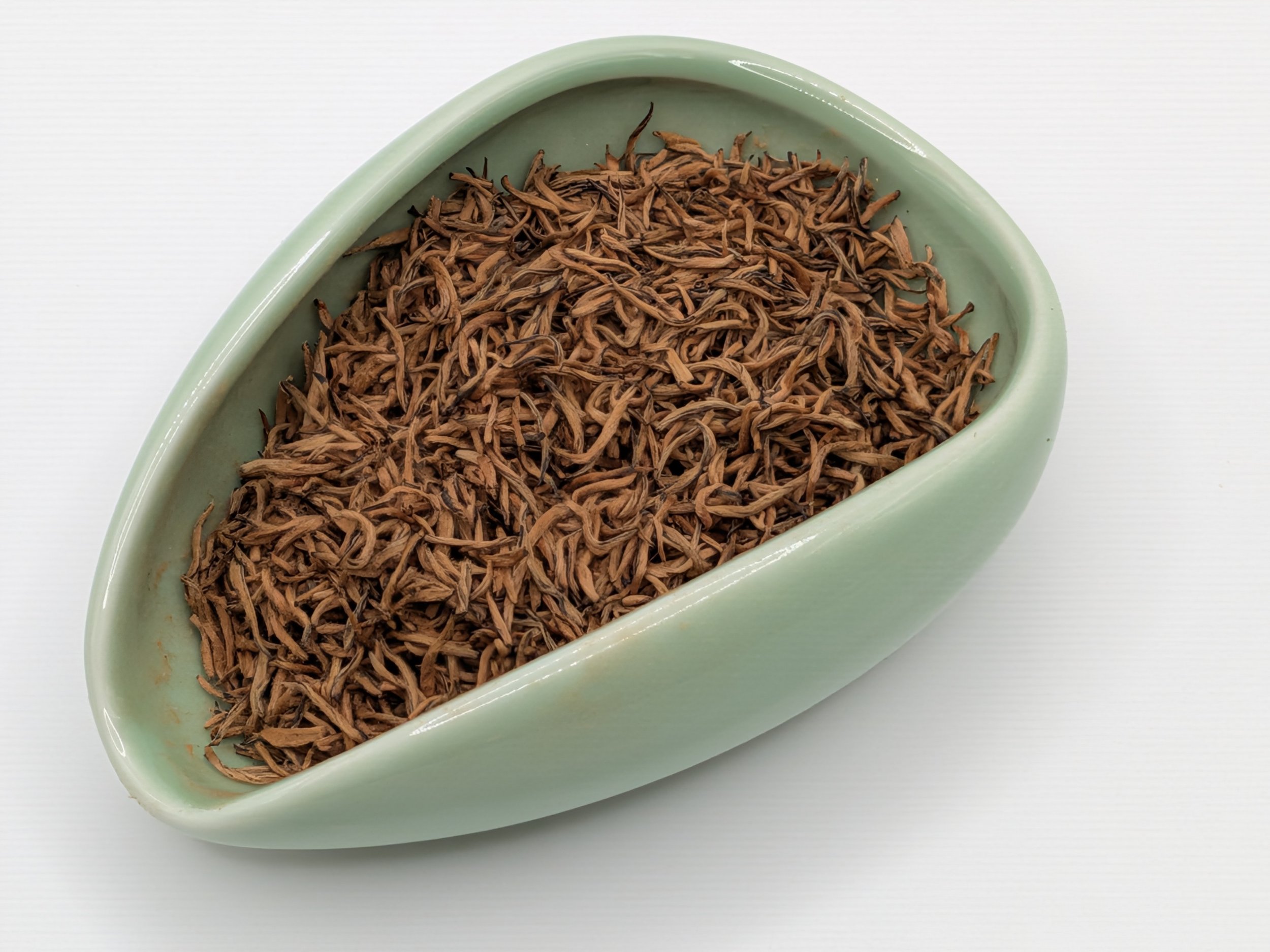
Aroma
The aroma is layered, warm, and inviting. As you bring the cup close, you’ll notice:
Sweet honey—light and floral, like wildflower or acacia honey
Cocoa and malt, soft and comforting
Dried fruit—especially longan, raisin, or red dates
Subtle floral notes, often reminiscent of osmanthus or orchid
A faint woodsy warmth, like polished cedar or warm bark
The fragrance tends to be very clean and elegant, without the smokiness or heaviness some black teas carry.
Flavor
Jin Jun Mei is known for its balance of brightness and depth. When you sip it slowly, the flavors open gradually:
Sweetness
Naturally sweet and smooth, with a honeyed character that envelops the palate from the first sip.
Fruity tones
Notes of:
ripe peach
dark berries
dried apricot
longan or lychee
These fruit elements are gentle but present, giving the tea a rounded, juicy feel.
Chocolatey warmth
Cocoa, milk chocolate, or even caramelized sugar often emerge, especially as it cools slightly.
Soft spice
Hints of cinnamon, clove, or nutmeg may appear, but never sharply—always woven into the sweetness.
Overall, the flavor is silky, bright, and refined, with none of the bitterness or astringency that can appear in lower-grade black teas.
Texture & Body
The liquor is smooth and full but not heavy—like satin on the tongue. The mouthfeel is often described as round, clean, and almost glistening, with a gentle liveliness that keeps the tea feeling fresh rather than dense.
Aftertaste
Jin Jun Mei shines in its long, graceful finish. Expect:
a lingering honey sweetness
a gentle fruit resonance
a faint floral glow
a warming, comforting depth
The hui gan (回甘)—that returning throat sweetness—is soft and continuous, sometimes lasting minutes.
Character & Story
Created only in the early 2000s, Jin Jun Mei is relatively young compared to many famous teas, yet it quickly became iconic. Its name reflects both elegance and movement:
金 (jin) — gold, referring to the buds’ golden tips
骏 (jun) — swift or noble steed
眉 (mei) — eyebrow, describing the slender, arched shape of the dry leaves
It’s often seen as the “jewel” of Wuyi black teas: delicate to produce, limited in quantity, and prized for its complexity and poise.about. What’s it made of? How was it made? What are ways to enjoy it?